11 / 19 · Be a traveller, not a tourist

Tripigator

Tripigator builds multi-city itineraries across flights, trains and cars, then helps travellers explore once they arrive. I owned the concept, visual design and experience of the Android app, which the press covered at launch as India's official travel planning app.

Role
Product designer
Client
Tripigator
Industry
Travel
Year
2014
Work
Product design, UI design, Interaction design

Planning a holiday in India often means several cities, several modes of transport and a lot of tabs. Flights, trains, cabs, hotels and things to do are each booked and compared on their own.

Those pieces rarely add up to one picture. A traveller could not see a whole round trip, with its legs, nights and rough cost, in one place. Changing it with friends, or finding what is worth doing nearby on arrival, was harder still.

Could a whole multi-city trip fit on one phone screen, clear enough to understand at a glance and easy enough to change?

Tripigator plans a trip from one short form: where from, where to, interests, dates, travellers and budget. I drew each plan as a loop, with cities as nodes and flights, trains and cars as the legs between them. Days, nights and an approximate price sit on the loop, with list and map views behind it. Destination guides, a radial "places near you" menu and a distance-sorted list take over once the trip begins.

My role

Product designer. Owned the concept, design and experience of the Android app: the warm visual language, custom interest icons, trip planner, visual itinerary, destination guides and nearby exploration.

What made it hard

  • A whole trip at a glance

    Multi-city plans mix flights, trains and cars over several days. The itinerary had to read in one look and still be editable.

  • Interests, not filters

    Travellers think in terms like family, hideaway, spiritual or wildlife. Custom icons had to make those choices quick and clear.

  • Let the landscape lead

    India's scenery is the reason to travel. Photography had to flow through the interface without drowning the information.

  • From planning to being there

    The app had to stay useful on the trip itself, with what is nearby sorted by distance in real time.

Questions we asked

  1. What is the smallest set of inputs that still produces a personal plan?
  2. How do you draw a round trip with three cities and three modes of transport?
  3. Which interests do Indian travellers actually plan around?
  4. What does a traveller need when they step out of the hotel?
01

A warm visual language

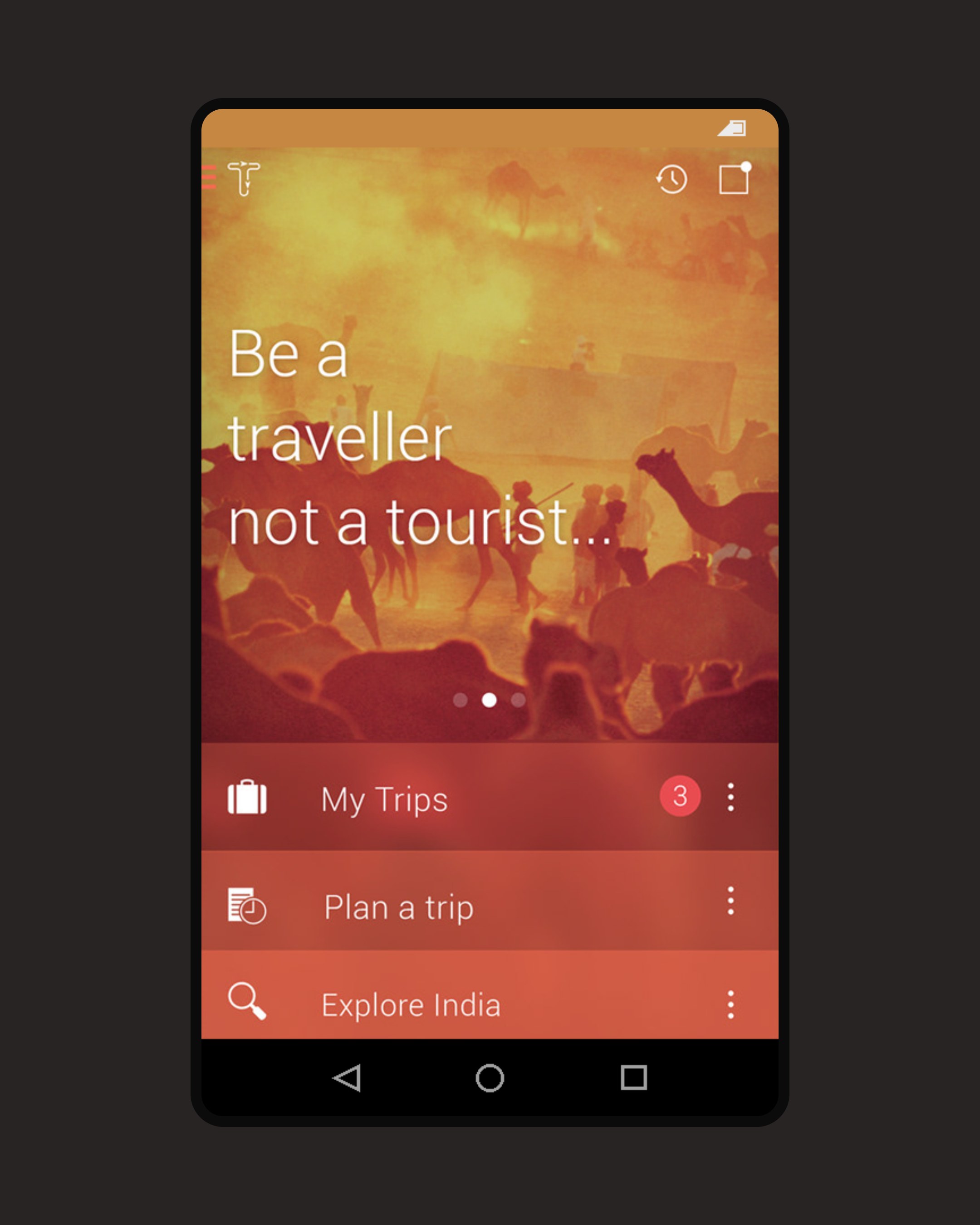
The app is built on a warm swatch: vermilion as the primary colour and amber black as the secondary. Full-bleed landscape photography runs through the landing page, such as a desert camel fair behind "Be a traveller not a tourist". My Trips, Plan a trip and Explore India stack over it. A dark sidebar holds notifications, favourites, recently viewed, places nearby and account settings.

A warm visual language

The T-arrow mark on vermilion, and the landing page over a desert camel fair.

02

Plan a trip

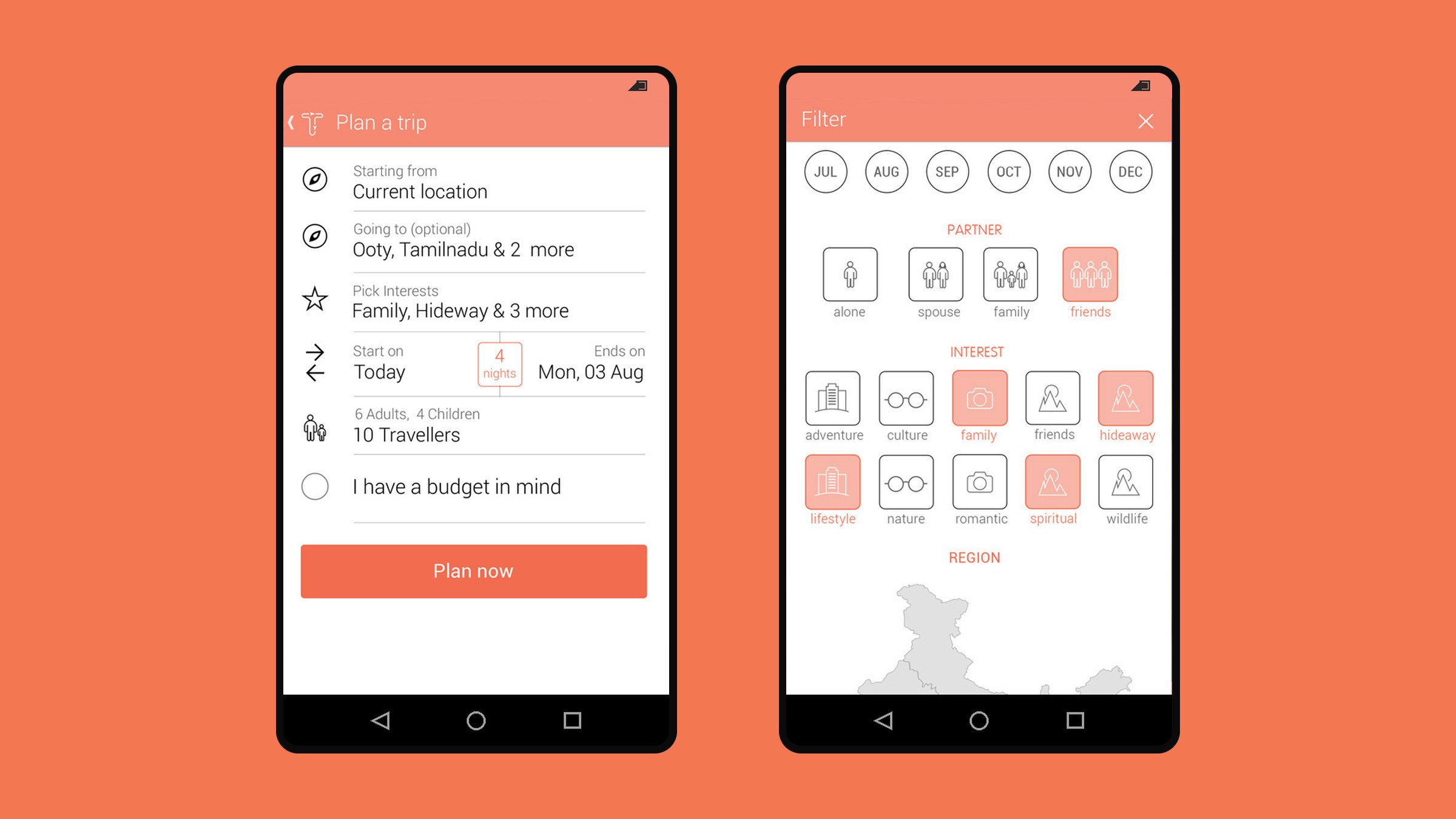
One short form: starting point, destinations, interests, dates with a nights count, adults and children, and an optional budget. Custom icons for interests such as friends, hideaway, spiritual and wildlife, plus pickers for travellers and price range, keep each input to a tap or two.

Plan a trip

The plan-a-trip form beside its interest and travel-partner filter.

03

The round trip as a loop

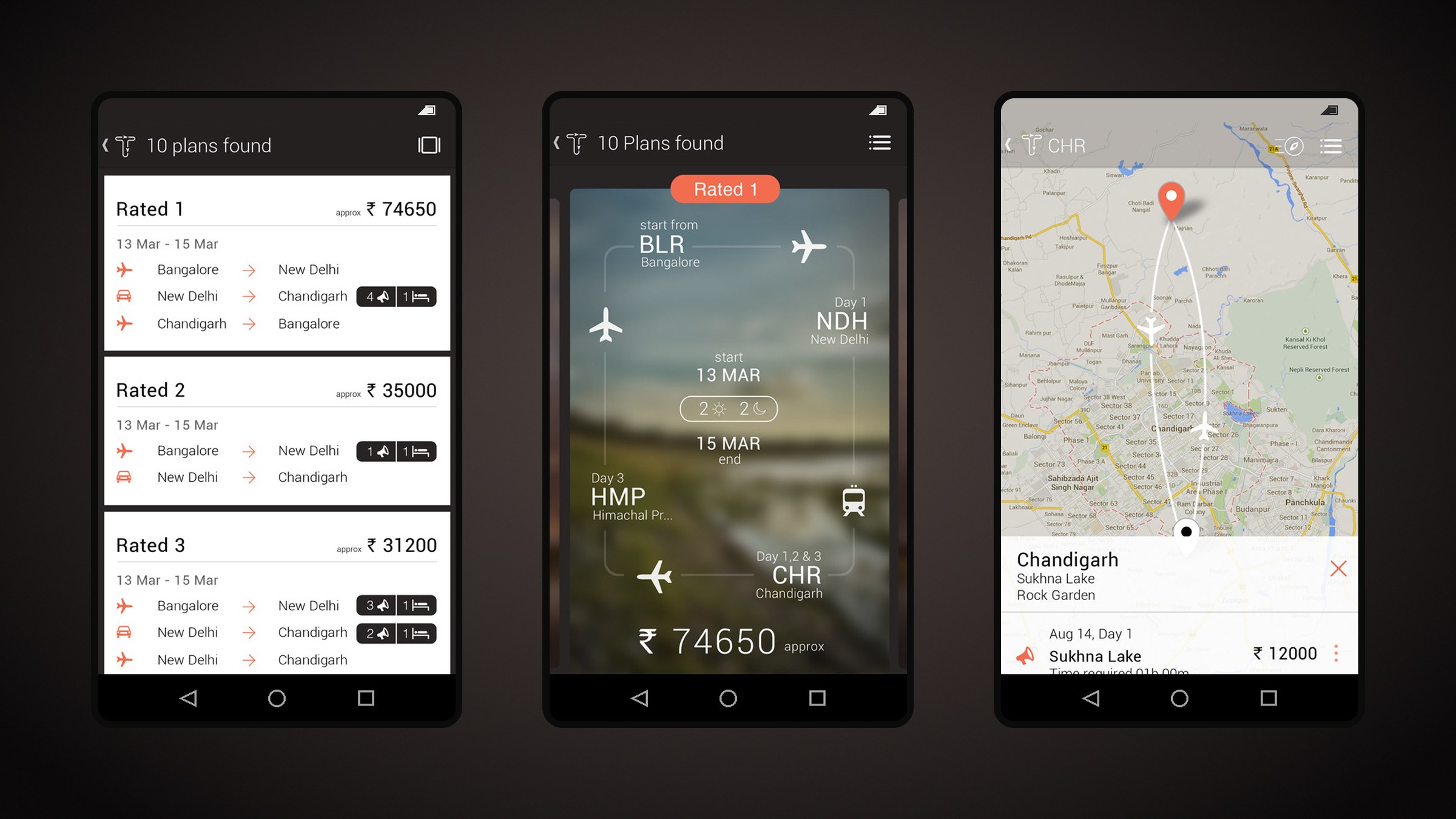
Results arrive as ranked plans. Each one draws the round trip as a loop: Bangalore to New Delhi by air, on to Chandigarh by car, and back by air. Days, nights and an approximate price in rupees sit on the loop. A list view compares plans side by side, and a map view traces the same route. Plans can be shared with friends or added to My Trips.

The round trip as a loop

Ranked plans, the loop and the same route on a map.

04

Everything about a destination

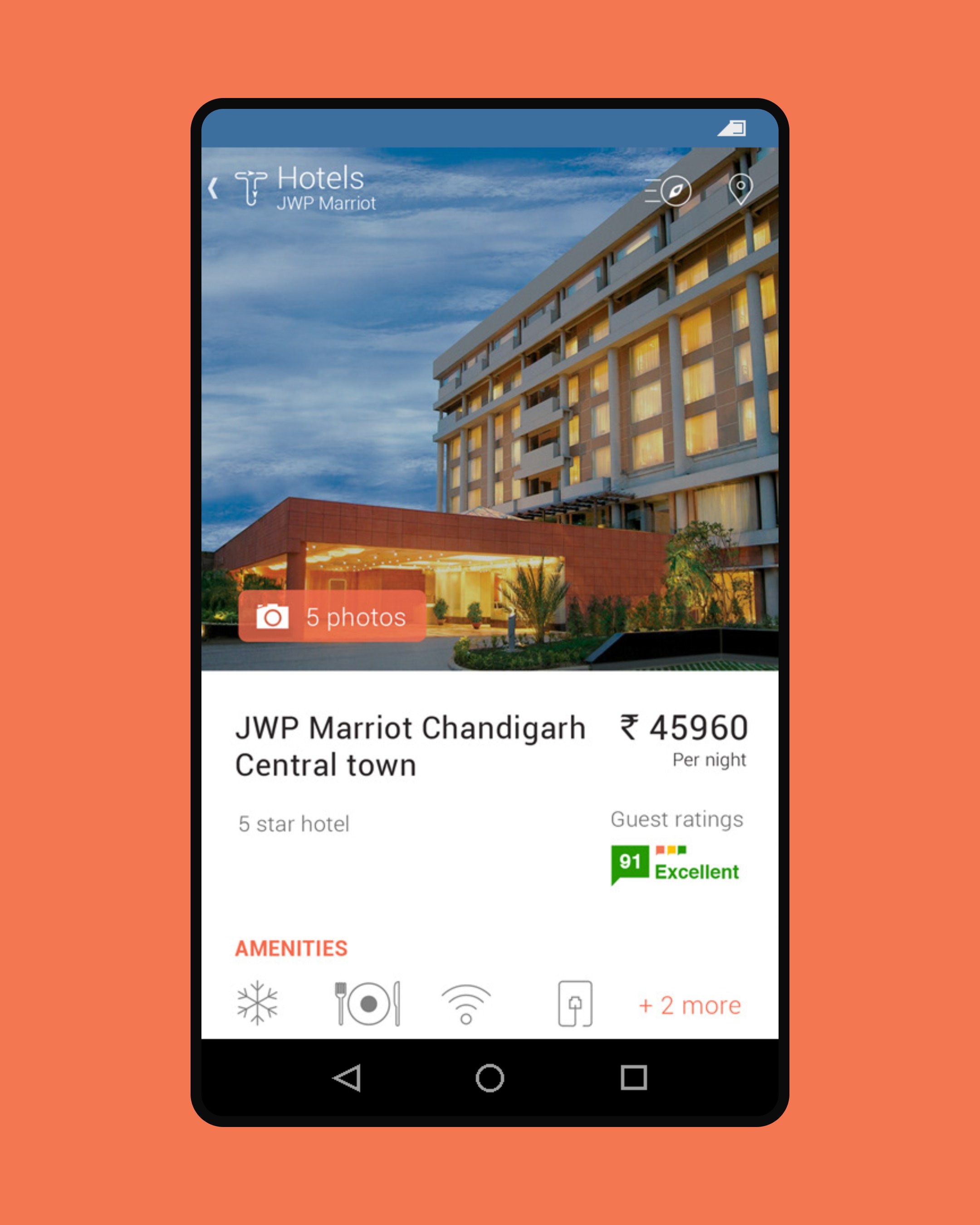
Destination screens collect what matters: weather, best time to visit, suggested days and nights, and price. Activities, hotels, eateries and ways of getting there each have their own list with filter and sort, down to hotel detail with guest ratings and amenities.

Everything about a destination

Hotel detail at the centre of activities, hotels, eateries and ways of getting there.

05

Explore what is nearby

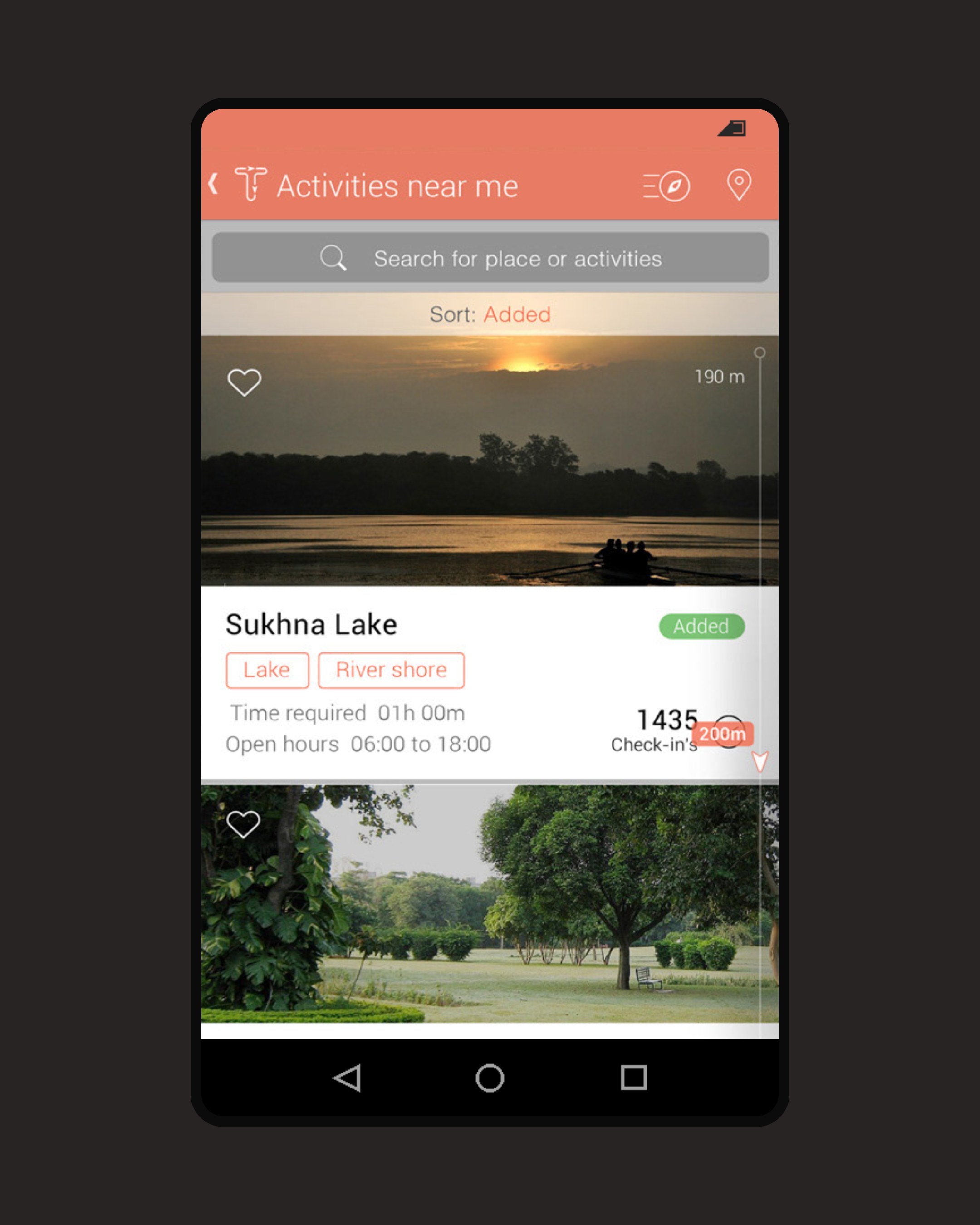
Explore searches destinations by interest and shows how many people have been there. A radial menu opens activities, eateries, hotels and practicalities around you. Filters cover month, travel partner, interests and region, and the near-me list scrolls by distance, nearest first, with the live distance shown on the scroll bar.

Explore what is nearby

The near-me list sorts by distance; Explore opens a radial menu around you.

06

At launch

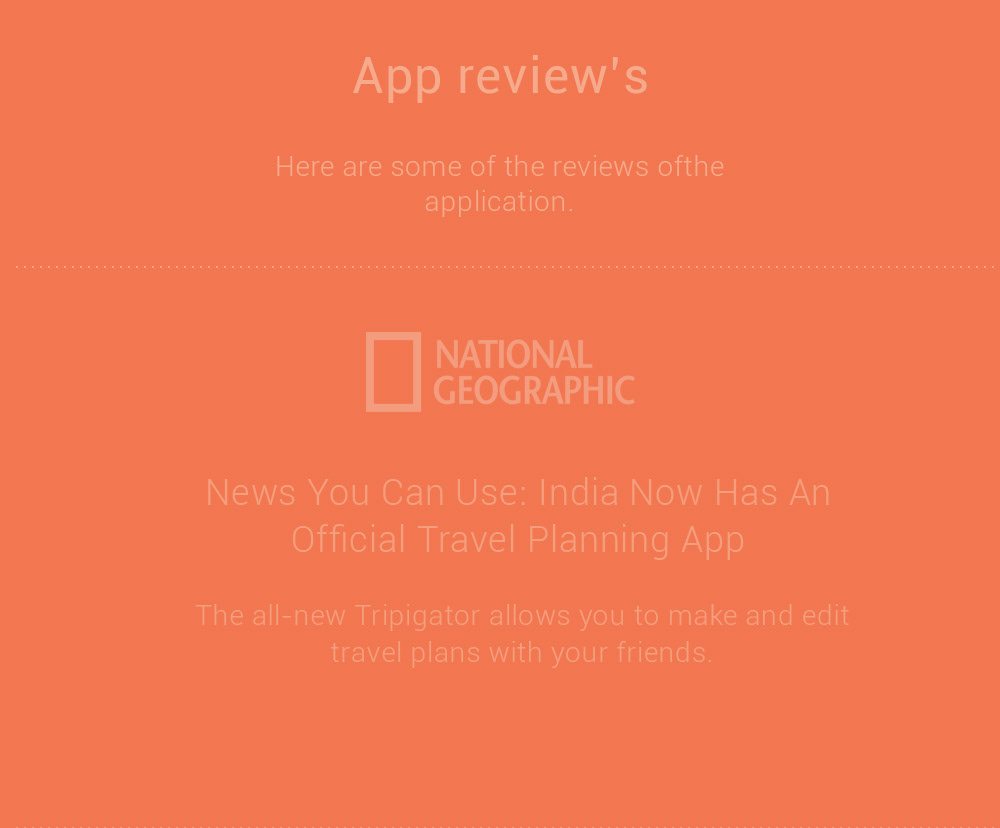
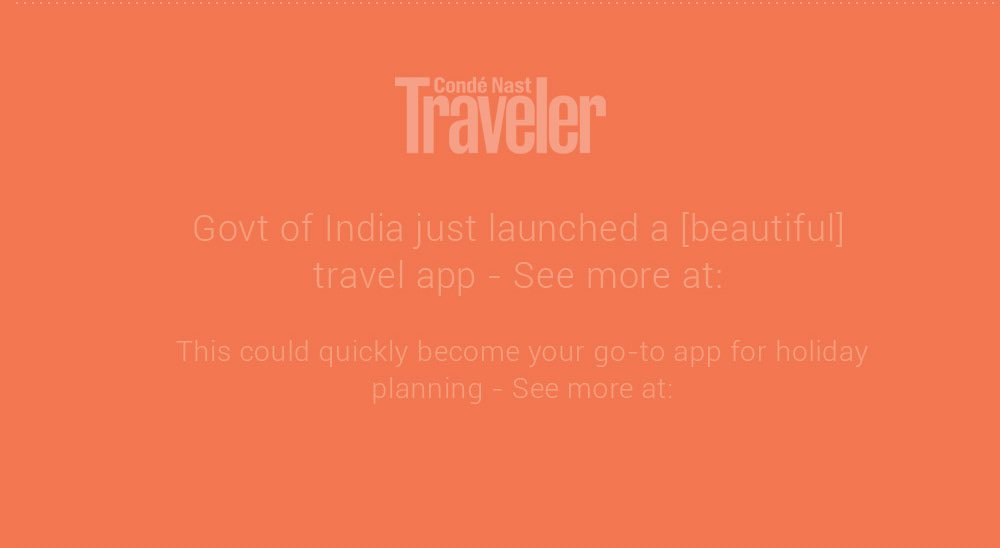
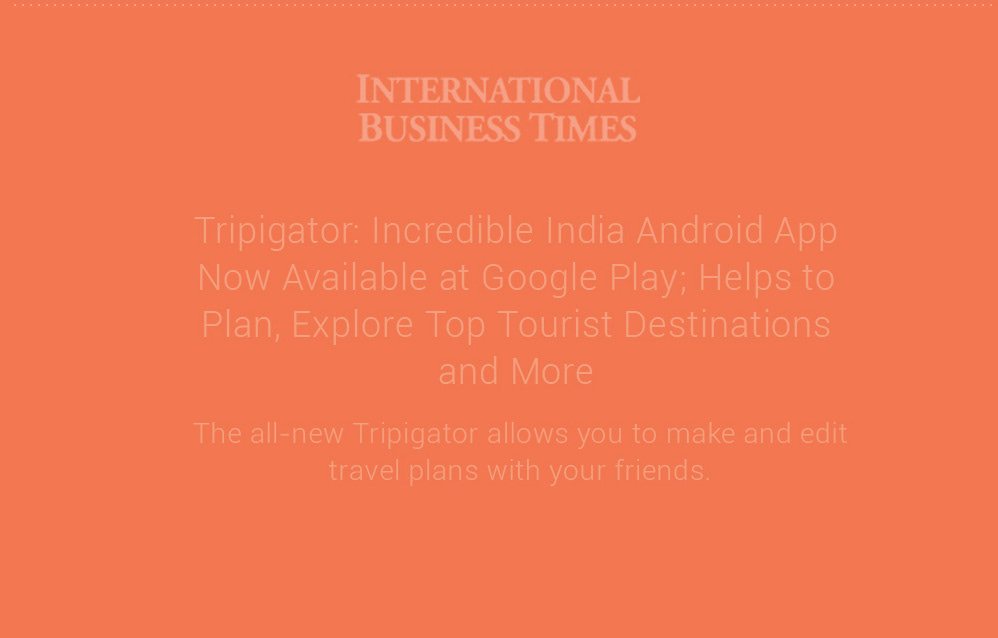
National Geographic Traveller India reported that India now had an official travel planning app. Condé Nast Traveller India wrote that it "could quickly become your go-to app for holiday planning", and International Business Times covered it as the Incredible India Android app on Google Play.

At launch
At launch
At launch

In motion

Outcomes

  • 3national press features at launch
  • 3travel modes in one itinerary view
  • 12+custom interest icons
  • Launched on Google Play and covered as India's official travel planning app (Incredible India)
  • Featured by National Geographic Traveller India, Condé Nast Traveller India and International Business Times (October 2014)

What I took away

  • Draw the plan the way people picture it. A loop of cities explained a round trip faster than a list of bookings.
  • Let the place do the selling. Photography carried the mood so the interface could stay quiet.
  • Design for home and the street. A travel app plans the trip, then has to help once you are there.
Concept, design & experience
Preetham Lawrence
Have a hard problem worth solving?

Let's solve it together.

preetham.lawrence@icloud.com
+41 76 740 46 30Phone
LinkedIn↗ Writing on Medium↗

Design leader based in Zürich, Switzerland. Open to leadership roles and selected collaborations.

© 2026 Preetham LawrenceIndex