When a supplier cannot see where an invoice stands, they send an enquiry, and someone at Novartis has to answer it. The company set out to modernise these workflows with new platforms: supplier requests, self-service registration, Master Data Governance for suppliers (MDG-S) and a Supplier Portal.
Enterprise platforms at Novartis had long been built process first. Requestors, back-office teams, procurement, risk management, business owners and suppliers were rarely asked what they needed. It showed in duplicate records between Ariba and SIM, unclear process status and a steady stream of enquiries that cost both sides time.
What would it take for six very different user groups, spread across countries and systems, to shape a programme that had always been driven by process?
My team of four joined the Supplier Experience subchapter and treated research as part of delivery. A segmentation workshop narrowed the field to the personas that mattered most. Country contacts helped us recruit, and more than 65 anonymous interviews produced six validated archetypes. We shared them in large forums, refined them with stakeholders and used them to design a self-service onboarding flow and a Supplier Portal on OneDS components.
My roleLead UX Strategist. Led a team of four UX practitioners embedded in the Supplier Experience subchapter. Defined the end-to-end UX strategy, ran the persona segmentation workshop, set up the interview programme and turned the findings into the direction for supplier onboarding and the Supplier Portal.
01
Mapping the customer groups
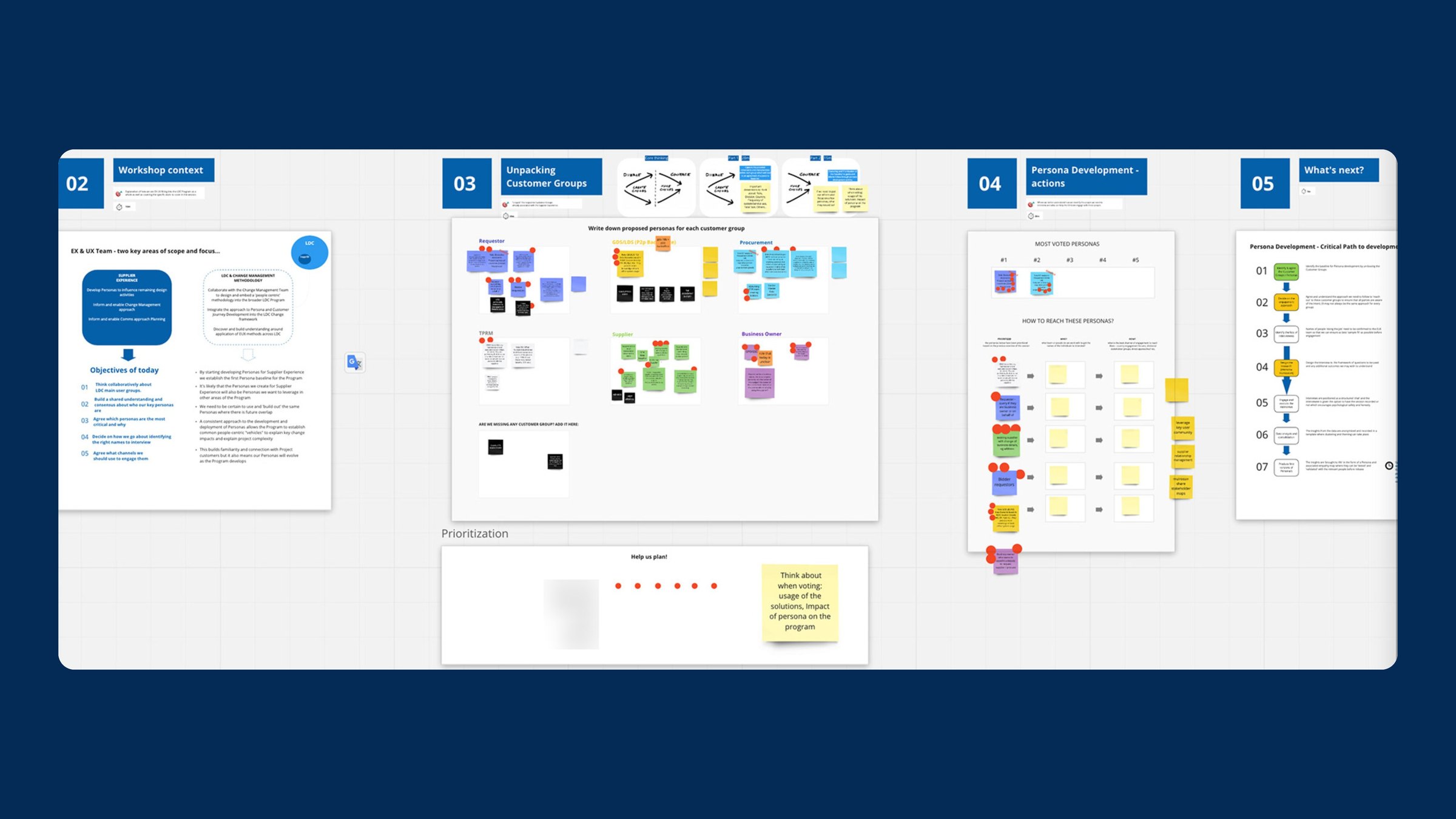
A 90-minute online workshop in Miro opened the work. We diverged first, listing every possible persona for each customer group, then converged through dot voting on the ones with the biggest impact on the programme. Six primary groups came out of it: requestors, P2P back office, procurement teams, third-party risk management, suppliers and business owners.
The segmentation workshop ran remotely on one Miro board, from context to customer groups, votes and next steps.
02
Listening across countries
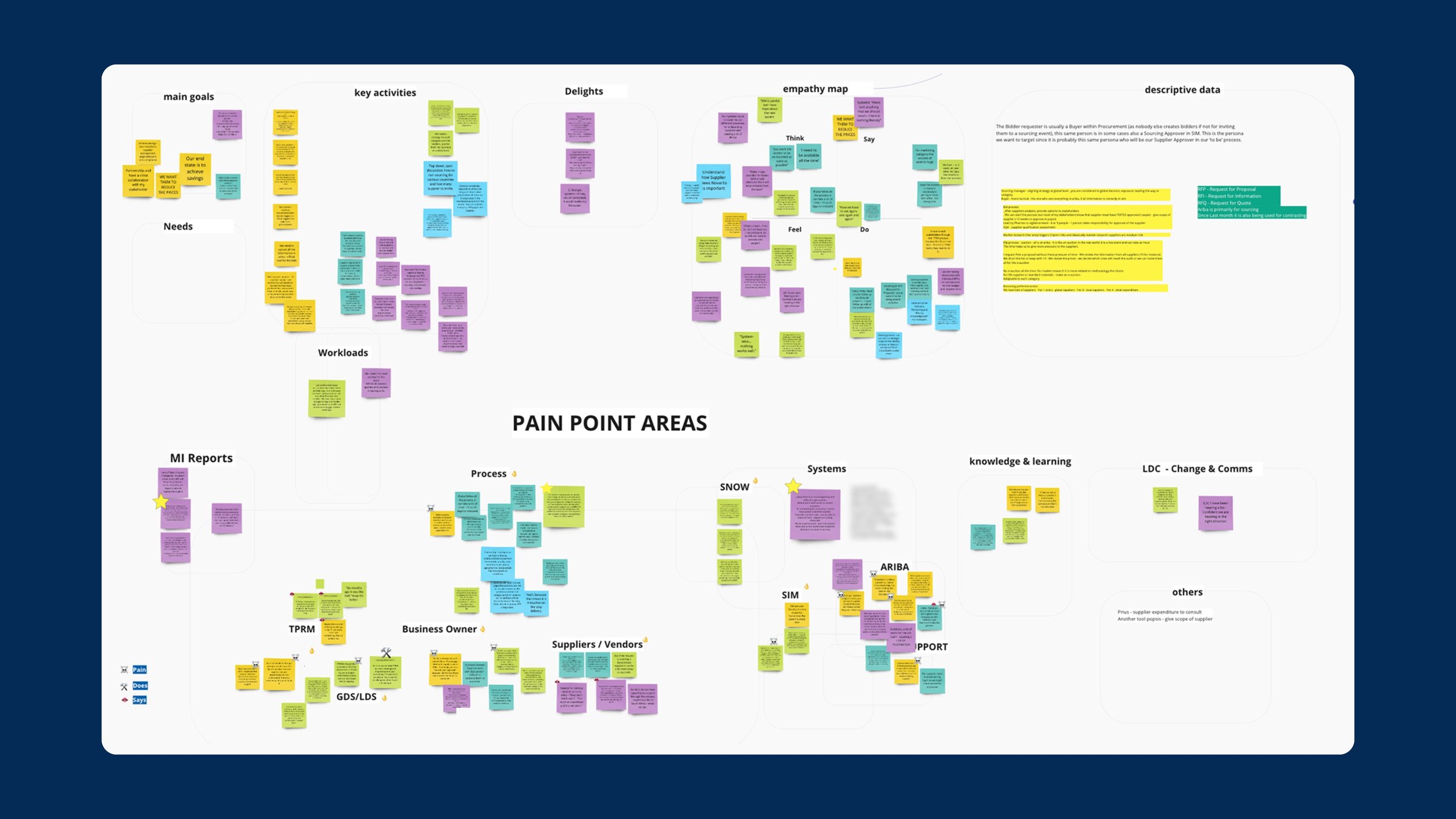
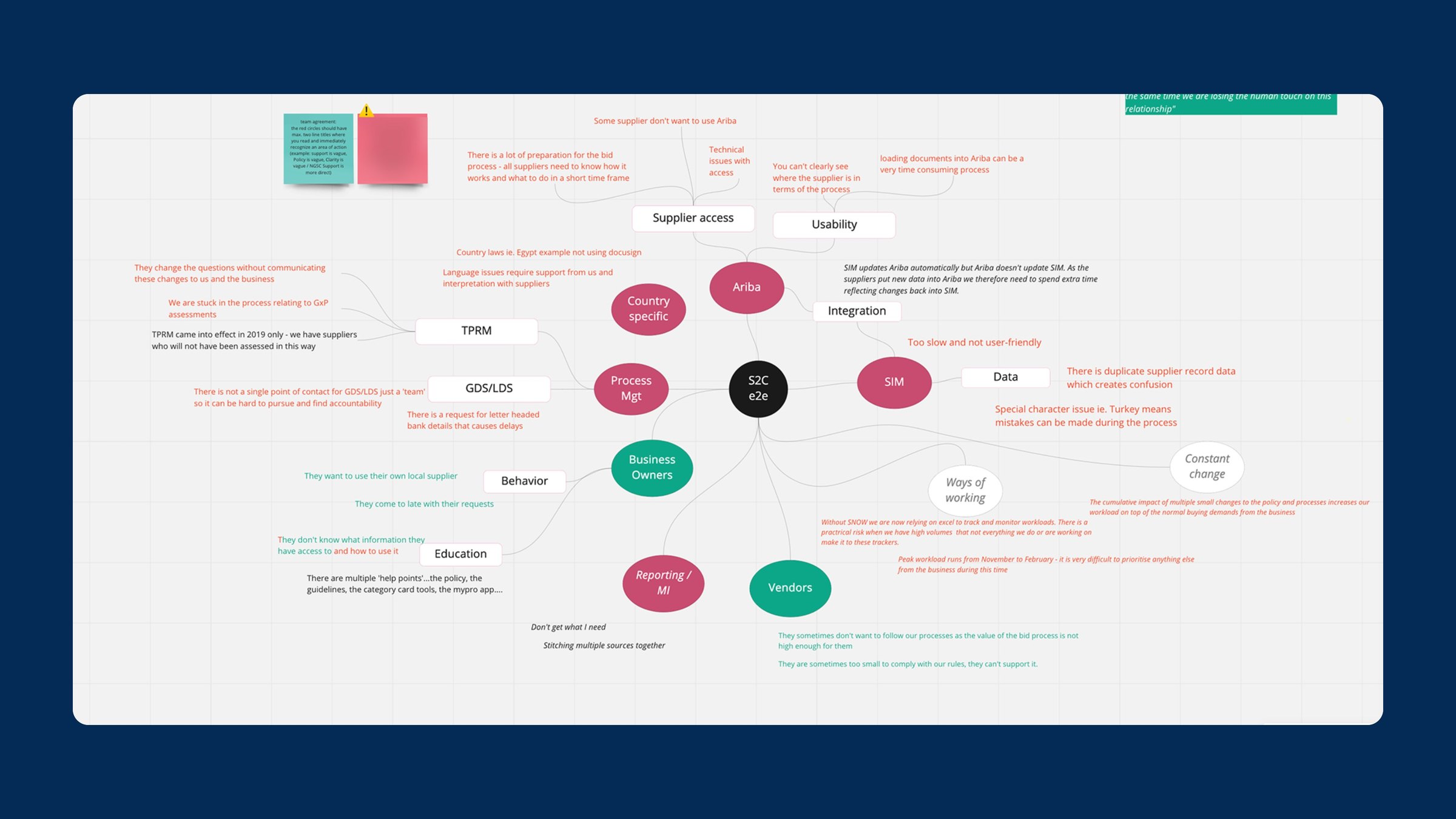
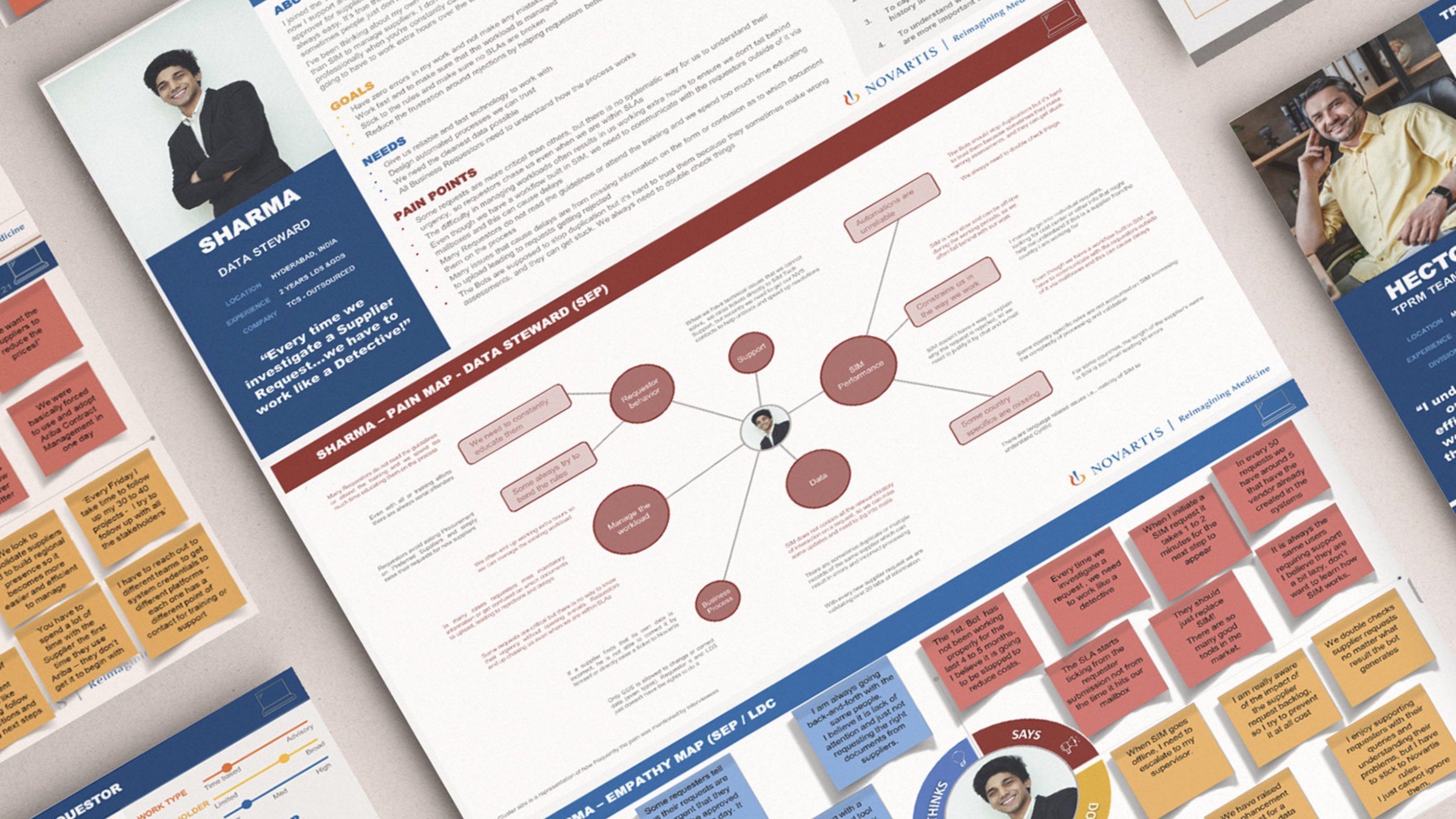
Country contacts helped us find 10 to 20 participants per persona group, and each received a pre-read before their session. Semi-structured, anonymous interviews covered roles, goals, pain points and aspirations. We clustered the findings in Miro into empathy maps and pain maps. They surfaced duplicate supplier records, unclear process status and a workload peak from November to February.
Interview notes were clustered into empathy maps and a source-to-contract pain map.
03
Six validated archetypes
More than 65 interviews produced six archetypes across two work streams, each with a persona sheet, an empathy map and a pain map. We shared early versions with project teams, collected feedback in large forums and iterated before finalising them, so the teams who would use the personas had helped shape them.
Each archetype came as a set: persona sheet, pain map and empathy map.
04
From insight to a self-service portal
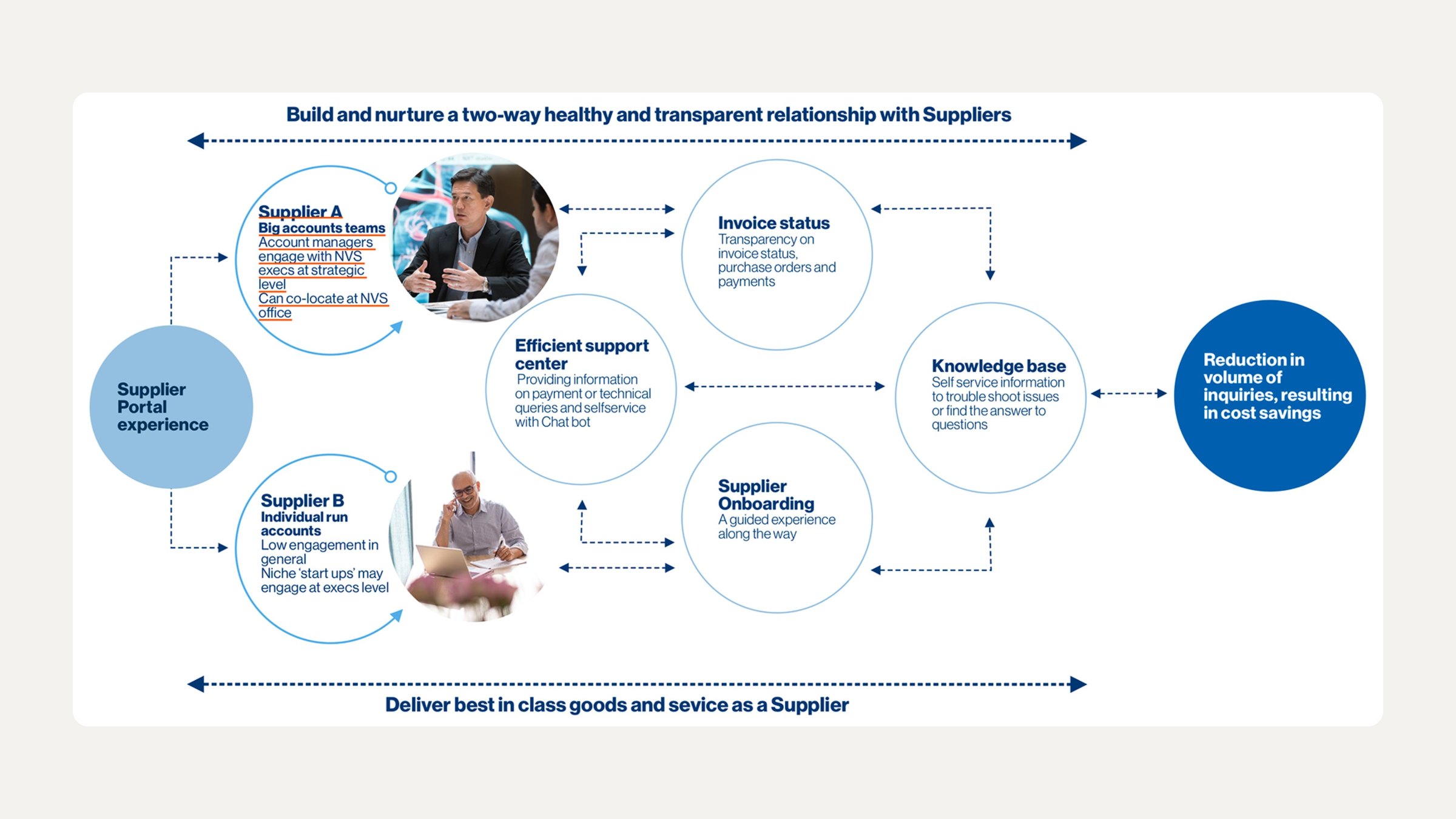
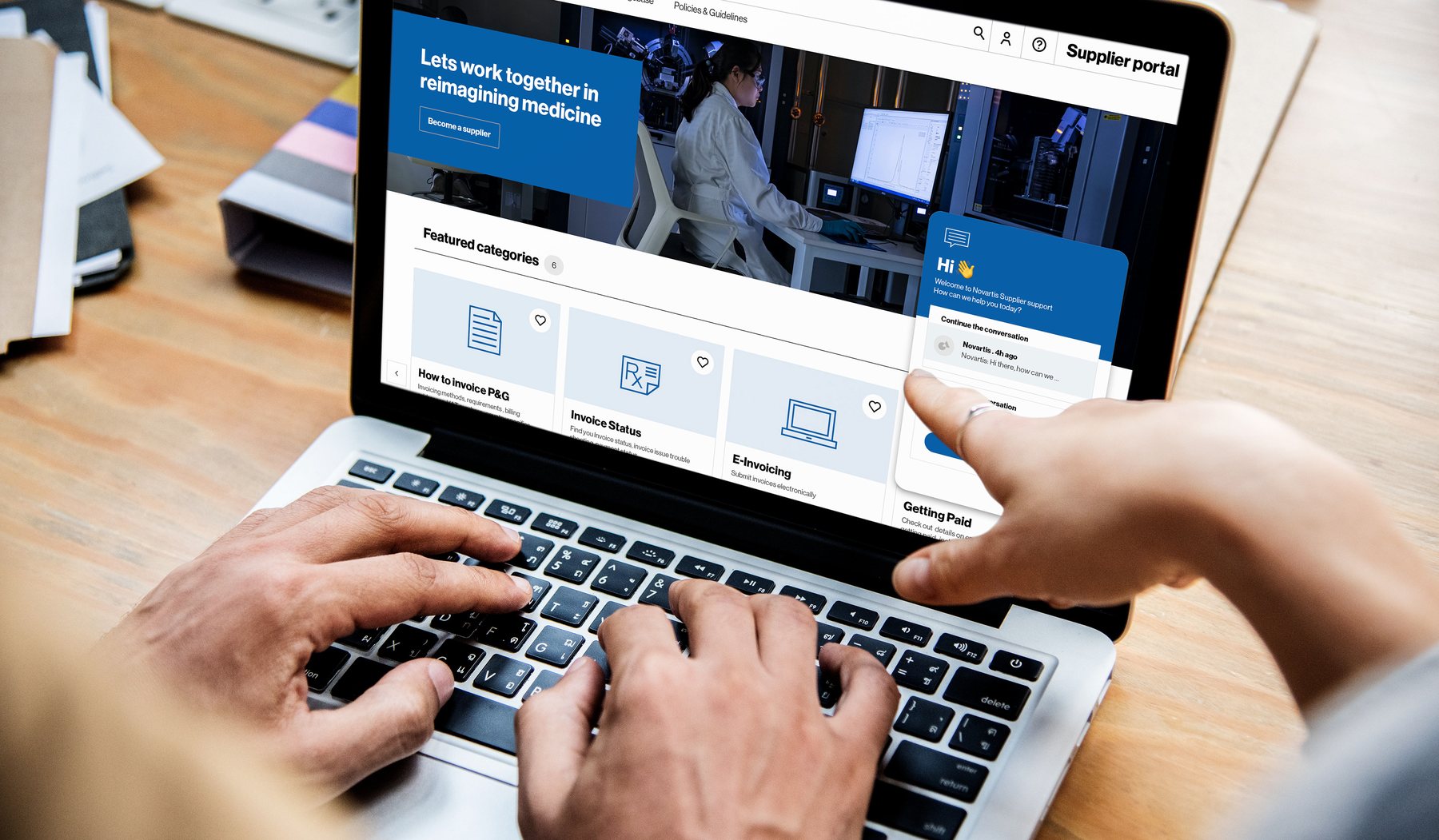
The personas pointed to one goal: fewer enquiries through more transparency. The Supplier Portal concept combines guided onboarding, invoice and payment status, a knowledge base and a support centre with a chatbot. It serves large accounts that work with Novartis at a strategic level and small suppliers with little engagement. The UI uses tested OneDS components, and we validated it with users at each stage.
The experience map linked both supplier archetypes to onboarding, invoice status, a knowledge base and support.